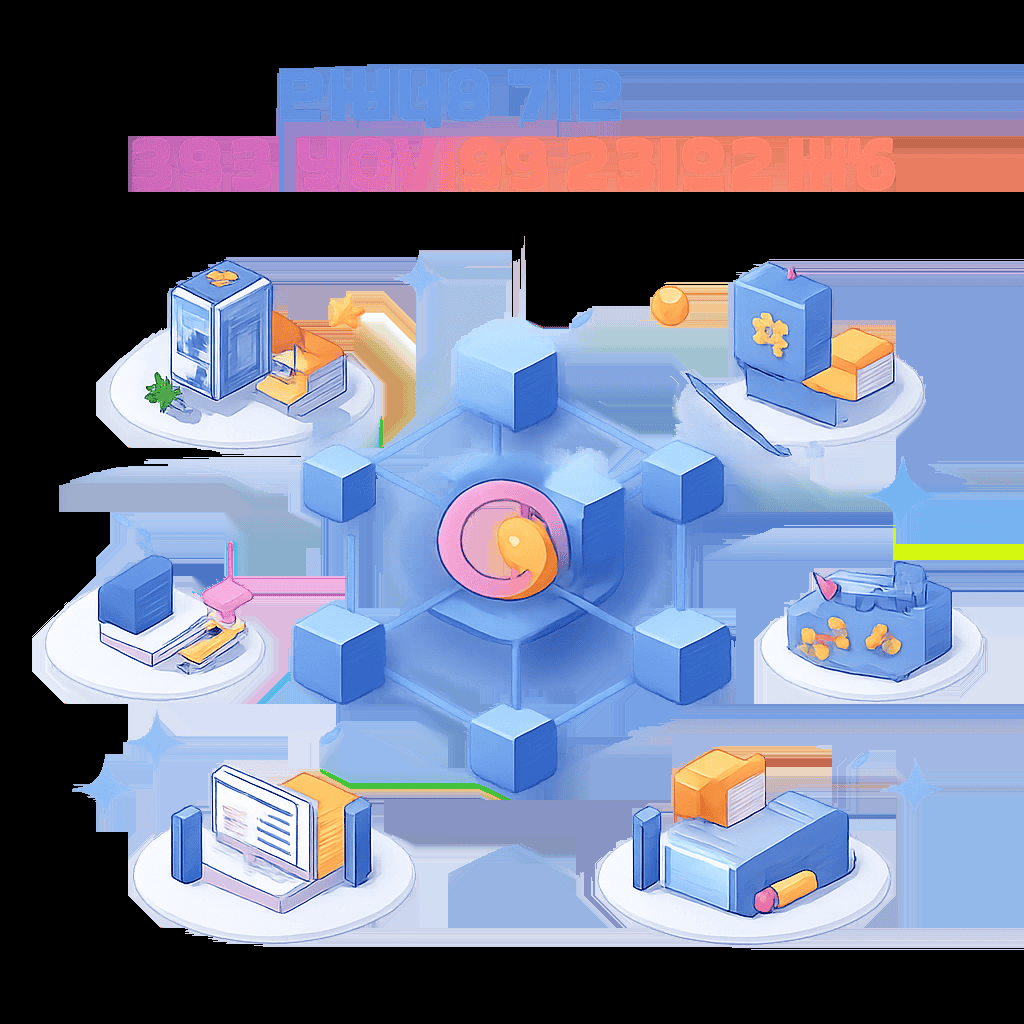
블록체인, 금융의 틀을 깨고 새로운 가능성을 열다
Blockchain technology, once primarily associated with the financial sector, is now breaking free from its initial confines to unlock a wealth of possibilities across a spectrum of industries. The genesis of this transformation can be traced back to the groundbreaking success of Bitcoin and other cryptocurrencies. These early applications vividly demonstrated the inherent power of blockchains core tenets: decentralization, transparency, and immutability. This technological foundation not only revolutionized traditional financial transactions by fostering trust and efficiency but also laid the groundwork for its broader applicability. The unique characteristics that made blockchain a game-changer in finance are now being recognized for their potential to drive innovation in areas far removed from monetary exchange. As we look ahead, the integration of blockchain with platforms like KakaoChannel, for instance, hints at the exciting synergies waiting to be explored, suggesting a future where this technology will permeate even more facets of our digital lives. This expansion beyond finance signifies a pivotal moment, prompting us to consider the next wave of applications and the profound impact they will have on diverse sectors.
금융 외 산업에서 블록체인 기술의 구체적인 적용 사례
The pervasive influence of blockchain technology, initially lauded for its revolutionary potential in finance, is now demonstrably extending its reach into a multitude of other industries. Moving beyond cryptocurrencies and decentralized finance, we are witnessing tangible applications that are reshaping operational efficiencies and enhancing trust across diverse sectors.
Consider the realm of supply chain management. Companies are leveraging blockchain to create immutable, transparent ledgers of goods as they move from origin to consumer. For instance, a food producer can record every step of its products journey – from farm to processing plant, through distribution, and finally to the retail shelf – on a blockchain. This not only allows for rapid traceability in case of recalls but also combats the pervasive issue of counterfeit goods. Consumers can scan a QR code and verify the authenticity and provenance of what they are purchasing, a level of assurance previously unattainable. The inherent immutability of the blockchain ensures that this data cannot be tampered with, building a foundation of trust between producers, distributors, and end-users.
In healthcare, the secure and decentralized nature of blockchain offers a compelling solution for managing sensitive patient records. Traditional systems often suffer from fragmented data, privacy concerns, and difficulties in interoperability between different healthcare providers. Blockchain can enable a patient to control access to their own medical history, granting permission to specific doctors or institutions as needed. Each access or update is recorded on the blockchain, creating a secure audit trail that enhances privacy and security. This not only streamlines the process for patients seeking care across different facilities but also provides researchers with anonymized data for medical advancements, while strictly adhering to privacy regulations.
The real estate sector is another area ripe for blockchain disruption. The complexities and opacity of traditional property transactions, involving numerous intermediaries, lengthy paperwork, and potential for fraud, can be significantly simplified. Blockchain can facilitate smart contracts that automatically execute property transfers once predefined conditions are met, such as verified payment. This reduces transaction times, lowers costs by cutting out intermediaries, and increases transparency. Digital representations of property titles on a blockchain offer a secure and easily verifiable record of ownership, mitigating disputes and streamlining the entire buying and selling process.
Copyright protection and intellectual property management are also finding powerful applications in blockchain. Artists, musicians, and writers can register their original works on a blockchain, creating a timestamped and irrefutable proof of creation. Smart contracts can then be used to manage licensing and royalty payments automatically, ensuring creators are fairly compensated for the use of their work. This disintermediation benefits creators by providing them with greater control and direct access to their audience and revenue streams.
Even the foundational processes of democratic governance are exploring blockchains potential. While still in early stages, the concept of secure, transparent, and auditable voting systems is being investigated. Blockchain could potentially offer a way to record votes immutably, prevent double-voting, and allow for independent verification of election results, thereby enhancing public trust in the electoral process.
The integration of these blockchain-based solutions with user-friendly platforms, such as those offered by Kakao Channel, presents a significant opportunity. Imagine a consumer using a Kakao Channel to verify the origin of their organic produce, access their own secure health records, or even confirm the ownership of a digital art piece theyve purchased. These platforms can act as an accessible gateway, abstracting the underlying blockchain complexity and delivering its benefits directly to the end-user in an intuitive manner. This bridge between advanced technology and everyday interaction is crucial for widespread adoption.
As we continue to explore these diverse applications, it becomes clear that blockchains transformative power is not confined to a single industry. Its ability to foster trust, enhance transparency, and streamline complex processes is proving invaluable across the economic landscape. The next frontier, therefore, lies in how these disparate blockchain ecosystems can interoperate and how their combined potential can be harnessed for even greater societal and economic impact.
카카오채널을 통한 블록체인 기술의 접근성 향상과 활용 방안
The integration of blockchain technology beyond its traditional stronghold in finance is rapidly gaining momentum, and a particularly promising avenue for accelerating this expansion lies in enhancing accessibility through familiar platforms like Kakao Channel. Our field observations indicate a significant gap between the potential of blockchain and its actual adoption, largely due to complexity and a perceived lack of user-friendliness. Kakao Channel, with its massive user base and established communication infrastructure, presents a unique opportunity to bridge this gap.
Consider, for instance, the dissemination of information. Instead of navigating disparate websites or complex technical documentation, users can receive curated blockchain news, project updates, and educational content directly through Kakao Channel messages. This immediate and accessible delivery mechanism can demystify concepts like cryptocurrency, NFTs, and decentralized applications (dApps). Imagine a scenario where a user interested in digital art receives a notification about a new NFT d https://ko.wikipedia.org/wiki/https://www.channelcan.com/post/%EC%B9%B4%EC%B9%B4%EC%98%A4%ED%86%A1-%EC%B1%84%EB%84%90-%EB%B9%84%EC%9A%A9 nk” id=”findLink”>https://www.channelcan.com/post/%EC%B9%B4%EC%B9%B4%EC%98%A4%ED%86%A1-%EC%B1%84%EB%84%90-%EB%B9%84%EC%9A%A9 rop, complete with a brief explanation and a direct link to view or purchase it via a connected dApp. This seamless experience significantly lowers the barrier to entry.
Furthermore, Kakao Channel’s messaging capabilities can be leveraged to facilitate blockchain-related transactions. While direct peer-to-peer transfers might require dedicated wallets and complex security protocols, a simplified interface within the channel could allow users to engage in basic token exchanges or subscribe to services powered by blockchain. For example, a user could opt-in to receive alerts about the price movements of specific blockchain-based assets, or even use a quick-reply function to confirm a purchase of a digital collectible. The underlying complexity of the blockchain transaction would be abstracted away, presenting a user-friendly interaction.
The potential extends to enterprise solutions as well. Businesses could use Kakao Channel to communicate with customers about blockchain-verified product authenticity or loyalty programs. A user could scan a QR code on a product, receive a Kakao Channel message confirming its origin and authenticity on the blockchain, and then be offered exclusive rewards within the same channel, redeemable through a simple message-based interaction. This not only enhances customer trust but also provides a traceable and transparent record of engagement.
Our analysis suggests that by embedding blockchain functionalities and information delivery within the ubiquitous Kakao Channel, we can achieve a significant boost in user adoption across various sectors. This approach moves beyond the technical intricacies, focusing on the user experience and leveraging existing digital habits. The next logical step in this evolution is to explore how these enhanced accessibility channels can foster the development of entirely new blockchain-native services that are not only functional but also intuitively designed for mass consumption.
블록체인 기술의 미래 전망과 지속 가능한 확장 전략
The initial promise of blockchain technology was intrinsically tied to the financial sector, envisioning a decentralized, transparent, and secure system for transactions. However, as weve witnessed firsthand, its potential extends far beyond cryptocurrencies and digital ledgers for banking. The true narrative of blockchains evolution lies in its remarkable adaptability and its capacity to permeate diverse industries, fundamentally altering how we approach data management, supply chains, and even digital identity.
Our exploration into this expansive future began by acknowledging the inherent strengths of blockchain: immutability, transparency, and distributed consensus. These arent abstract concepts; they translate into tangible benefits. In supply chain management, for instance, weve seen pilot projects where blockchain provides an unalterable record of a products journey from origin to consumer. This not only enhances traceability, combating counterfeit goods, but also streamlines logistics by creating a single, trusted source of information accessible to all stakeholders. Imagine a world where verifying the authenticity of pharmaceuticals or the ethical sourcing of raw materials is as simple as querying a blockchain. The reduction in disputes and the increase in consumer trust are direct outcomes of this technological application.
Moving beyond logistics, the healthcare sector presents another compelling frontier. The secure and decentralized management of patient records, with patient consent as the cornerstone, promises to revolutionize data privacy and accessibility. Instead of siloed databases prone to breaches, blockchain offers a system where individuals can control who accesses their sensitive medical history, while simultaneously enabling researchers to access anonymized data for groundbreaking discoveries. The implications for public health and personalized medicine are profound.
However, this optimistic outlook is not without its challenges. The scalability issue remains a significant hurdle. Early blockchain iterations struggled with transaction speed and volume, leading to high fees and slow processing times. While solutions like layer-2 scaling and sharding are actively being developed and implemented, they are still in their nascent stages of widespread adoption. Expert analysis suggests that continued innovation in consensus mechanisms and network architecture will be crucial to overcome these limitations and enable blockchain to handle the demands of global industries.
Furthermore, the regulatory landscape is a complex and evolving tapestry. As blockchain technology matures and its applications diversify, governments worldwide are grappling with how to regulate it effectively. Striking a balance between fostering innovation and mitigating risks such as money laundering and illicit activities is paramount. Our observations indicate that proactive engagement between technology developers, industry leaders, and policymakers is essential. The development of clear, adaptable regulatory frameworks will be a key determinant of blockchains long-term success across various sectors.
The successful integration of blockchain into everyday life also hinges on user experience and accessibility. Technologies that are difficult to understand or use will inevitably face adoption barriers. This is where strategic collaborations become instrumental. Platforms like KakaoChannel, with their established user bases and intuitive interfaces, possess the potential to act as critical bridges. By integrating blockchain-based services within familiar platforms, the complexity can be abstracted away, allowing everyday users to benefit from the underlying technology without needing to become blockchain experts. This could manifest in a myriad of ways, from secure digital identity verification for social platforms to transparent and efficient loyalty programs.
In conclusion, blockchain technologys journey from a niche financial tool to a transformative force across industries is well underway. While technical and regulatory challenges persist, the clear benefits in terms of security, transparency, and efficiency are driving its expansion. The future of blockchain is not about replacing existing systems but about augmenting them, creating more robust, trustworthy, and interconnected ecosystems. The continued collaboration between technological innovation, thoughtful regulation, and user-centric platforms like KakaoChannel will undoubtedly accelerate this evolution, ushering in an era where blockchains positive impact is felt across the entirety of society.